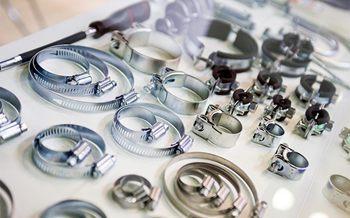
304 Stainless Steel Hose Clamps: The core composition is 18% chromium + 8% nickel, which belongs to a general-purpose stainless steel material. It contains no molybdenum and has low cost.
316 Stainless Steel Hose Clamps: The core composition is 18% chromium + 10% nickel + 2% molybdenum. It contains key molybdenum element, which is the core reason for its stronger corrosion resistance compared with 304.
304 Stainless Steel Hose Clamps: They can only resist corrosion in ordinary environments and effectively prevent rust, meeting daily basic rust prevention needs. They cannot withstand the erosion of strong acids, strong alkalis, salt spray and seawater.
316 Stainless Steel Hose Clamps: Due to the molybdenum element, their corrosion resistance is greatly improved. They can resist the erosion of seawater, salt spray, acids, alkalis and chemical media, belonging to marine-grade and chemical-grade stainless steel, suitable for harsher corrosive environments.
304 Stainless Steel Hose Clamps: High cost performance and large usage, suitable for ordinary scenarios, such as indoor tap water pipelines, ordinary air pipes/oil pipes, civil equipment, conventional industrial machinery and other environments without strong corrosion.
316 Stainless Steel Hose Clamps: Higher price, suitable for harsh scenarios, such as coastal equipment, ships, chemical workshops, pharmaceutical/food industries, gas pipelines, long-term outdoor high-humidity and high-salt environments, etc.
Price: 304 hose clamps have high cost performance and low cost; 316 hose clamps are much more expensive due to the high cost of materials.
Appearance and Hardness: There is almost no difference in appearance between the two, which cannot be distinguished by the naked eye; their hardness and strength are similar, and the core difference is only in corrosion resistance, which has nothing to do with appearance and hardness.
address
No 19, Guanghai Road, Jinghai new
economic developed zone, Tianjin city
telephone
86-022-68771238
86-022-68772466
86-022-68771191
tjbc@tjbchg.com