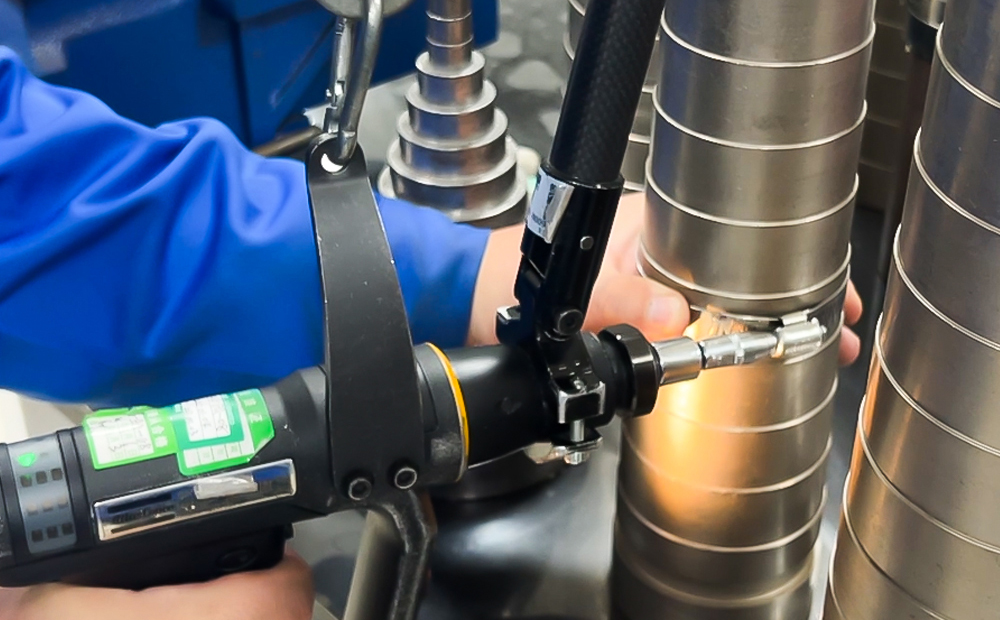
Definition: The minimal torque required to rotate the screw when the clamp is unloaded. It reflects internal friction and installation smoothness.
Typical Value: ≤1.0 N·m
Significance: A low value ensures easy turning and prevents jamming.
Definition: The target tightening torque required for proper sealing during normal operation.
Typical Value:
Standard: 4.5–8 N·m
Heavy-Duty: ≥8 N·m
Significance: Insufficient torque causes leaks; excessive torque damages the screw or band.
Definition: The maximum torque at the failure point (screw stripping or band breaking).
Typical Value: 10–40+ N·m
Significance: Indicates ultimate strength. Installation torque must be lower than 75% of this value.
address
No 19, Guanghai Road, Jinghai new
economic developed zone, Tianjin city
telephone
86-022-68771238
86-022-68772466
86-022-68771191
tjbc@tjbchg.com