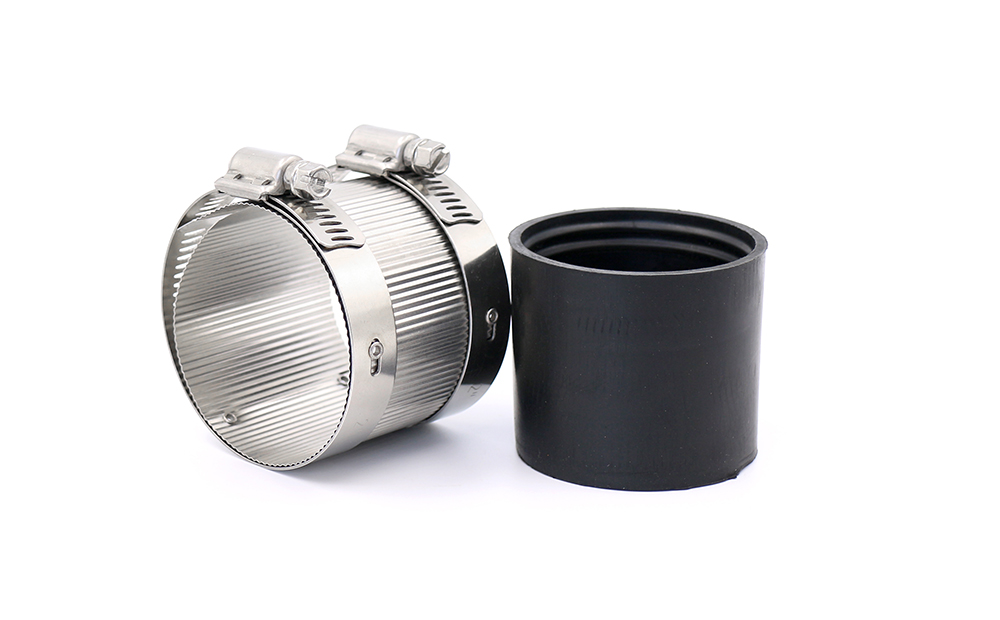
The core of customizing rubber for hose assemblies lies in defining working conditions and functions first, then selecting materials and processes, and finally closing the loop through sample verification and mass production. The whole process can be implemented following the standard procedure below.
Basic Dimensions: Inner diameter / outer diameter / length / wall thickness / flange / step
Functional Objectives: Sealing / shock absorption / wear resistance / temperature resistance / pressure resistance
Working Environment: Medium (oil / water / acid and alkali / steam), temperature (-20℃~150℃), pressure (≤1.6MPa), vibration frequency
Performance Indicators: Hardness (Shore A), tensile strength, compression set, medium resistance expansion rate
Delivery Requirements: Quantity, lead time, certification (RoHS / ISO), packaging
EPDM: Temperature resistance -40℃~150℃, resistant to acid, alkali, water and ozone, anti-aging, suitable for water systems and outdoor working conditions.
NBR: Oil-resistant (mineral oil / hydraulic oil), wear-resistant, suitable for oil medium environments.
FKM: Temperature resistance -20℃~200℃, resistant to high-temperature corrosion and oil, suitable for harsh working conditions.
Silicone Rubber: High and low temperature resistance (-60℃~250℃), food-grade, suitable for special temperature or hygienic requirements.
Compression Molding: Suitable for complex-shaped, high-precision bushings / seals, tolerance up to ±0.05mm.
Extrusion Molding: Suitable for continuous pipes / profiles, high efficiency, for long straight pipes / hoses.
Injection Molding: Suitable for mass-produced complex small parts, high precision and consistency.
Special Processes: For dynamic working conditions, necking process is recommended to improve fatigue life by 3-5 times; bonding strength shall be considered for metal rubber-covered parts.
Sampling and Testing: Produce T1/T2 samples first, test according to standards (dimension, hardness, tension, medium resistance, pulse cycle), confirm samples after key indicators meet requirements.
Mold Development: Develop molds based on confirmed drawings; mold precision directly affects product consistency.
Mass Production: Strictly vulcanize according to formula and process parameters, control temperature, pressure and time to ensure stable performance.
Quality Inspection: Full inspection of dimensions and appearance, sampling inspection of performance, and issue quality inspection reports.
Packaging and Logistics: Moisture-proof and pressure-resistant packaging for export, specify transportation methods to avoid damage.
After-sales Support: Provide technical documents (installation instructions, material certificates), track usage feedback, optimize formulas or processes in time.
Do not ignore the compression set index, which directly affects long-term sealing effect.
For dynamic working conditions, necking process or structural optimization is required to avoid early fatigue tearing of rubber.
For export orders, confirm material compliance (RoHS, REACH) in advance to avoid customs clearance problems.
address
No 19, Guanghai Road, Jinghai new
economic developed zone, Tianjin city
telephone
86-022-68771238
86-022-68772466
86-022-68771191
tjbc@tjbchg.com